Synopsis
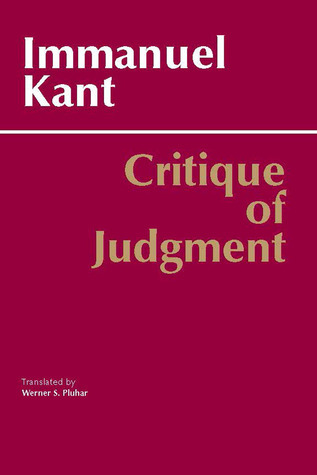
In THE CRITIQUE OF JUDGMENT (1790), Immanuel Kant (1724-1804) seeks to establish the a priori principles underlying the faculty of judgment, just as he did in his previous critiques of pure and practical reason. The first part deals with the subject of our aesthetic sensibility; we respond to certain natural phenomena as beautiful, says Kant, when we recognize in nature a harmonious order that satisfies the mind's own need for order. The second half of the critique concentrates on the apparent teleology in nature's design of organisms.
Critique of Judgment Quiz
Free 15-question quiz — how well do you know it?
Most-read books on perLibre
 Madonna in a Fur CoatSabahattin Ali
 Animal FarmGeorge Orwell
 1984George Orwell
 Chess: A NovelStefan Zweig
 The MetamorphosisFranz Kafka
 Letter from an Unknown Woman: The Fowler SnaredStefan Zweig
 Crime and PunishmentFyodor Dostoevsky
 My Sweet Orange TreeJOSÉ MAURO DE VASCONCELOS
 What Men Live ByLeo Tolstoy
 Notes from UndergroundFyodor Dostoevsky
 The Little PrinceAntoine de Saint-Exupéry
 Martin EdenJack London
Track it on perLibre
Keep the books you read and the movies and shows you watch in one place. Free.