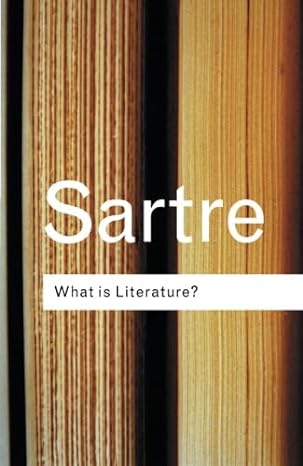
Synopsis
Jean-paul sartre was one of the most important philosophical and political thinkers of the twentieth century. His writings had a potency that was irresistible to the intellectual scene that swept post-war europe, and have left a vital inheritance to contemporary thought. The central tenet of the existentialist movement which he helped to found, whereby god is replaced by an ethical self, proved hugely attractive to a generation that had seen the horrors of nazism, and provoked a revolution in post-war thought and literature.
What is Literature? Quiz
Free 15-question quiz — how well do you know it?
Readers of this book also read
 Faithful RuslanGeorgi Vladimov
 Magna MoraliaAristotle
 Lenin's KissesYan Lianke
 Of All That EndsGünter Grass
 Testaments Betrayed: An Essay in Nine PartsMilan Kundera
 A Small Treatise on the Great Virtues: The Uses of Philosophy in Everyday LifeAndré Comte-Sponville
 Bento's SketchbookJohn Berger
 How Are We to Confront Death?: An Introduction to PhilosophyFrançoise Dastur
 Nostalgia: When Are We Ever at Home?Barbara Cassin
 What is Metaphysics?Martin Heidegger
 Between Two Worlds: The Construction of the Ottoman StateCemal Kafadar
 SoulAndrey Platonov
Track it on perLibre
Keep the books you read and the movies and shows you watch in one place. Free.