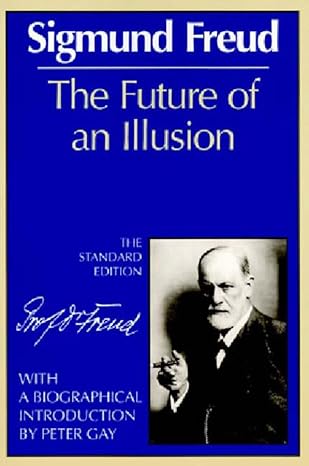
Synopsis
In the manner of the eighteenth-century philosophe, freud argued that religion and science were mortal enemies. Early in the century, he began to think about religion psychoanalytically and to discuss it in his writings. ? The future of an illusion? (1927), freud's best known and most emphatic psychoanalytic exploration of religion, is the culmination of a lifelong pattern of thinking.
The Future of an Illusion Quiz
Free 15-question quiz — how well do you know it?
Readers of this book also read
 Emotional Intelligence: Why It Can Matter More Than IQdaniel-goleman
 Existential PsychotherapyIrvin D. Yalom
 The Crowd: A Study of the Popular MindGustave Le Bon
 The Merchant of VeniceWilliam Shakespeare
 The SonnetsWilliam Shakespeare
 Three DeathsLeo Tolstoy
 Prometheus BoundAeschylus
 The Black MonkAnton Chekhov
 The Fisherman and His SonZülfü Livaneli
- Fenitschka/Deviations: Two NovellasLou Andreas-Salomé
 It Didn't Start with You: How Inherited Family Trauma Shapes Who We Are and How to End the CycleMark Wolynn
 Totem and TabooSigmund Freud
Track it on perLibre
Keep the books you read and the movies and shows you watch in one place. Free.