Synopsis
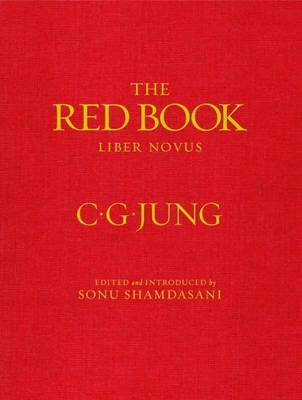
When Carl Jung embarked on an extended self-exploration he called it his “confrontation with the unconscious,” the heart of it was The Red Book, a large, illuminated volume he created between 1914 and 1930. Here he developed his principle theories—of the archetypes, the collective unconscious, and the process of individuation—that transformed psychotherapy from a practice concerned with treatment of the sick into a means for higher development of the personality. While Jung considered The Red Book to be his most important work, only a handful of people have ever seen it.
The Red Book: Liber Novus Quiz
Free 15-question quiz — how well do you know it?
Readers of this book also read
 Signs Taken for Wonders: On the Sociology of Literary FormsFranco Moretti
 Rites and Symbols of InitiationMircea Eliade
 The Open Society and Its EnemiesKarl Popper
 DreamsC.G. Jung
 Four ArchetypesC.G. Jung
 The Quest: History and Meaning in ReligionMircea Eliade
 Collected Works of C. G. Jung, Volume 6: Psychological TypesC. G. Jung
 Dream Analysis 1: Notes of the Seminar Given in 1928-30C.G. Jung
 The Guermantes WayMarcel Proust
 Technologies of the Self: A Seminar with Michel FoucaultMichel Foucault
 The Glass Bead GameHermann Hesse
 Aspects of the MasculineC. G. Jung
Track it on perLibre
Keep the books you read and the movies and shows you watch in one place. Free.